Pokémon Masters EX
- 4.2
- Rating
- 10.00M
- Installs
- Free
- Price

 Analysis by App-foxy
I spent time with Pokémon Masters EX as a role-playing game built around the connection between Pokémon and their Trainers, and its biggest appeal became clear quite quickly: it is designed for people who enjoy collecting recognizable characters as much as they enjoy building a capable battle team. It is free to download, made by DeNA Co., Ltd., and available for Everyone, but the experience is more involved than the short store description suggests. It asks you to learn team roles, manage resources, and make sensible choices about where to spend your time.
That makes it an interesting choice for a shared household device. One person may want to follow the story and collect favorite Trainers, while another may care more about improving battle performance. Those interests can coexist, but they should not be confused with separate player profiles. I found that the game works best when each player understands whose progress, selections, and spending decisions belong to the active game account.
How Pokémon Masters EX fits into a shared household
A realistic use case is a family tablet used after school or in the evening. One player might complete a few battles while waiting for dinner, then hand the device to someone else who wants to inspect the team or continue an event. The game suits this kind of short-session routine because its battles can be approached in focused bursts rather than requiring an entire uninterrupted afternoon. Still, passing the same account around changes the experience: the next player inherits the previous player's choices, resources, and progress.
You May Also Like

 Blood Strike: 2.5 Anniversary
Blood Strike’s Loadouts Turn Every Drop Into a Tactical Gamble
A close look at Blood Strike’s custom loadouts: how fast access to signature weapons reshapes its battle royale rhythm, rewards preparation, and narrows the gap between fights.

 Pandora - Music & Podcasts
Pandora’s Music Is Easy to Start, but Harder to Recover
Pandora’s strength is its low-effort path from a seed to a station. Its weak spot is how much confidence it asks you to place in connection, setup, and quiet recovery.

 8 Ball Pool
 Is Built on Rivalries, Rematches, and Routine
A close look at the rivalries, rematches, shared routines, and unanswered safety questions that turn a quick pool match into a persistent mobile community.

 Samsung Music
’s Quiet Strength Is Playing What You Already Own
Its reach comes less from spectacle than from dependable access to a personal library. That simplicity is both the app’s strongest retention engine and its ceiling.

 AccuWeather: Weather Radar
AccuWeather Review: A Quick, Clear Forecast for Everyday Decisions
For everyday plans, the best forecast is the one you can understand quickly. AccuWeather makes rain timing, radar, and local conditions easy to act on, with a few trade-offs.

 Hill Climb Racing
Why Hill Climb Racing Still Turns Crashes Into One More Run
A tiny car, a bumpy hill and one more upgrade: Hill Climb Racing keeps resurfacing because its simple chaos makes every near-miss feel personal.
More From Our News Desk



I would therefore treat the game as a shared activity only when everyone agrees on the boundaries. It is enjoyable to compare teams, discuss which Trainer to develop, and plan a difficult battle together. It is much less enjoyable when someone spends a valuable item, changes a formation, or uses paid currency without asking. The central household lesson is simple: shared hardware does not automatically mean shared progress.
This matters because the game encourages decisions that have lasting value inside the account. Building a team is not just a matter of selecting the three strongest-looking characters. Different battles reward different combinations, and a player who understands the roster may make choices that another player would not have made. Before sharing, I would agree on whether everyone is allowed to train units, use resources, or make purchases, or whether one person remains the account manager.
For a solo player, this is easier. I could experiment with teams without explaining every choice, and the game felt more coherent when I was the only person shaping the account. For a household, the most comfortable arrangement is usually one clearly identified player, with others joining as spectators, advisers, or occasional participants rather than treating one save as a collection of independent profiles.
The first setup decision is who owns the account
The initial setup deserves more attention than I expected. Before beginning, decide which person will be responsible for the account and whether the device is merely being used to access it. This distinction is especially important when a child plays on a parent's phone or when several people use a family tablet. The game is free, but free access does not remove the need to discuss in-app purchases, which range from $0.99 to $79.99 per item.
I would make the spending rule explicit before anyone starts. A child may see a desirable character or a useful-looking offer and assume that a small purchase is harmless, while a parent may see the same action as an unexpected charge. Even if the game is mostly played without spending, the presence of optional purchases means the household should decide who can approve them. That conversation is more useful than simply saying “be careful,” because it gives the player a clear action to follow.
Another sensible boundary is a quick handover routine. The outgoing player can say what was completed, what they were saving, and whether they changed the current team. This takes only a moment but prevents confusion. I found that resource-based role-playing games become frustrating when players cannot tell whether a decision was deliberate or accidental, and that problem is amplified when the device moves between people.
The game runs on Android from version 7.0 onward, which makes it accessible on a broad range of compatible devices. That does not mean every older phone will feel equally comfortable. Battles involve visual effects, menus, and character presentation, so a household should test the actual device rather than assume that operating-system compatibility guarantees a smooth experience. If the game feels slow or the screen is cramped, a newer shared tablet may be more pleasant than a small phone passed between players.
Coordination changes how team building feels
Pokémon Masters EX is more engaging when players talk about why a team works instead of simply handing over the device. The useful question is not always “Which character is strongest?” but “What does this battle require, and which combination can cover it?” That shift helps a household avoid the common mistake of investing every resource in the most familiar or visually appealing choice.
When I approached team building, I paid attention to the relationship between a Trainer and their Pokémon rather than viewing the roster as a pile of unrelated units. That pairing gives the game its identity and makes collecting feel more personal than in a conventional battle game where creatures are the only focus. It also creates a good shared discussion: one player may value a favorite character, while another may notice that a different pairing fits a particular challenge better.
A practical household workflow is to let one person handle the account's long-term development and invite others to help with battle planning. This preserves consistency while still making the game social. Another option is to alternate responsibility by clearly saying, for example, “You choose the team, I handle the battle,” rather than allowing several people to make changes at once. These small rules reduce accidental decisions without turning casual play into a formal schedule.
I also recommend pausing before using enhancement materials or other limited resources. New players often want immediate progress, but a resource spent on the wrong unit can make later planning less flexible. I learned more by comparing options first and then committing than by upgrading whatever was available at the moment. That is one of the game's less obvious trade-offs: collecting is exciting, but developing everything equally is not always the most efficient approach.
For a shared device, a simple written note or household message can help. It might record the current goal, the team being tested, and whether resources are being saved. This is not a game feature; it is a practical habit that prevents one player from unknowingly undoing another player's plan. It is particularly useful when play is spread across different times of day and the device is not always in the same person's hands.
Age rating is broad, but trust still matters
The Everyone rating makes the game approachable for a wide audience, and the Pokémon setting is naturally familiar to younger players. However, age suitability and spending readiness are not the same thing. A child can understand the battles and story while still needing guidance about purchases, account ownership, and the difference between a favorite character and a genuinely useful team investment.
I would present the game to younger players as a collection and strategy experience, not as a race to obtain everything immediately. That framing makes room for patience. It also helps explain why a free game can still contain optional purchases and why a household might choose not to buy them. The conversation can remain practical rather than dramatic: ask before spending, do not alter someone else's progress without permission, and accept that not every desired character will be obtained at once.
Trust also applies to device access. If the game is installed on an adult's phone, the child should know whether they may open it independently, whether they may use mobile data, and whether they may make changes. I would not assume that the game's age rating answers those household questions. It describes the general content audience, while the family still needs its own rules for access and responsibility.
For older players, the game offers a different kind of appeal. Someone who grew up with Pokémon may enjoy seeing Trainers receive as much attention as the Pokémon themselves, while a role-playing fan may appreciate the gradual process of assembling and refining teams. The experience is less suitable for someone who wants a completely hands-off collection game. It rewards at least some thought about battle composition and progression, even when the presentation remains friendly and colorful.
What the battle and collection loop does well
The strongest part of my experience was the way the game makes character relationships central to the roster. Instead of treating Trainers as decoration around the Pokémon, it gives the pairings a clear role in the identity of each unit. That makes the collection loop more emotionally engaging for fans who have favorite characters, regions, or story connections.
The role-playing structure also gives the battles a useful layer of decision-making. I had to think about which units belonged together, what each one contributed, and whether a familiar favorite was actually the best answer to the current challenge. This is where the game separates itself from a simple character-collecting app. The collection has a purpose, and the purpose becomes clearer as the battles demand more deliberate preparation.
At the same time, the game is not ideal for everyone who likes Pokémon. If your main goal is to explore a world freely, catch creatures in the wild, or experience a traditional adventure with direct movement through towns and routes, this is a different proposition. Its focus is on Trainers, pairings, battles, and account development. A mainline-style Pokémon game may be a better fit for that particular kind of exploration.
It also differs from many role-playing alternatives that emphasize a single original hero. Here, the appeal comes from assembling a roster of established personalities and their partners. That can feel more immediately rewarding for fans, but it may be less satisfying if you prefer creating one character and watching that character grow through a long personal journey.
Where the free model creates friction
The free entry point is convenient, especially for a household deciding whether the game deserves space on a shared device. I could begin without committing money, learn the basic rhythm, and decide whether the collection and battle systems were worth continued attention. The downside is that optional purchases can affect how players think about progress, particularly when someone is eager to obtain a specific character or accelerate development.
My advice is to judge the game first by how enjoyable it is without spending. If the battles, team planning, and character collection are already satisfying, purchases can remain a separate choice rather than becoming the reason to continue. If the experience only feels worthwhile when progress is accelerated, that is a sign the game may not be a good match for your household budget or expectations.
Another limitation is the possibility of account friction in a shared setting. The game is not a substitute for separate family profiles, and passing one account between players can create disputes over progress. A household with several equally active players may prefer games that clearly support multiple saves or distinct user spaces. Pokémon Masters EX is more comfortable when one person owns the ongoing journey and others participate with permission.
There is also a time-management issue. Collection-focused role-playing games can encourage repeated checking, upgrading, and planning. I would avoid presenting it as something that must be monitored constantly. A short, defined session works better for many households: choose a goal, play a few battles, review the result, and stop. That approach keeps the game from becoming an unplanned background habit.
Version, audience, and practical expectations
The current version is 2.65.1, and the game has been available since August 16, 2019. Those details place it in the category of an established mobile title rather than a brand-new experiment. That can be reassuring for someone who wants a developed Pokémon-focused game, but it also means a new player is entering an experience with a substantial amount of material and a roster that may take time to understand.
Its average rating is 4.2 from around 525 thousand ratings, with more than 31 thousand written reviews, and it has passed 10 million installs. I read those figures as evidence of a large audience, not as a guarantee that every player will enjoy the same parts. A broad player base can indicate that the central idea works, while individual preferences still decide whether the pace, collection structure, and spending model feel comfortable.
For a new player, I would resist trying to understand everything in one sitting. Start by learning what each team member contributes, then notice which battles expose weaknesses in your current setup. Keep a small number of clear goals instead of upgrading every available option. This makes the early experience less noisy and gives the collection a strategic shape.
For a parent or household organizer, the practical checklist is different: confirm who owns the account, agree on purchase approval, decide whether others may change teams, and choose a reasonable session length. These steps are more important than whether the device is a phone or tablet. The game can be family-friendly in content while still requiring adult judgment around shared access and optional spending.
Who should play it, and who should skip it
I would recommend it to Pokémon fans who enjoy character collecting, team construction, and battles that reward preparation. It is especially appealing if you like recognizing Trainers and thinking about how their partnerships fit together. It also works for players who want a role-playing game that can be approached in shorter sessions rather than demanding a console-style commitment every time.
I would be more cautious about recommending it to someone who dislikes collection systems, repeated progression, or the pressure created by optional purchases. It is also not my first choice for a household where several people need completely independent progress on one device. In that situation, a game with clearly separated user profiles would reduce arguments and make ownership simpler.
It may not satisfy players looking for a deep, open-ended Pokémon adventure. The emphasis here is narrower and more focused: Trainers, Pokémon pairings, battles, and developing a roster. That focus is a strength when it matches your interests, but it becomes a limitation when you want free exploration, a single-player narrative hero, or a purely competitive battle environment.
My household verdict
After using it, I see Pokémon Masters EX as a strong shared-conversation game but a less straightforward shared-account game. Two people can have fun discussing teams, favorite Trainers, and battle plans, yet the underlying progress should have one clear owner. That distinction prevents most of the frustration I can imagine in a family setting.
DeNA Co., Ltd. has built a role-playing experience around a recognizable idea and given it enough strategic depth to reward attention. I liked that the Trainer-and-Pokémon pairing is more than a visual theme; it shapes how the collection feels and encourages players to think about teams rather than individual characters alone. The free price makes trying it easy, while the optional purchase range means household rules should come first.
My final recommendation is conditional but positive. Install it if your household has one main player, enjoys Pokémon character collecting, and is comfortable agreeing on spending and account boundaries. Let other family members advise, watch, or take turns in clearly defined ways. Skip it if everyone expects a separate save, if you want traditional exploration, or if optional purchases would create ongoing tension. For the right player, the best part is not simply collecting another pairing; it is learning why that pairing belongs in a particular team.
FAQs for Pokémon Masters EX
01What is Pokémon Masters EX?
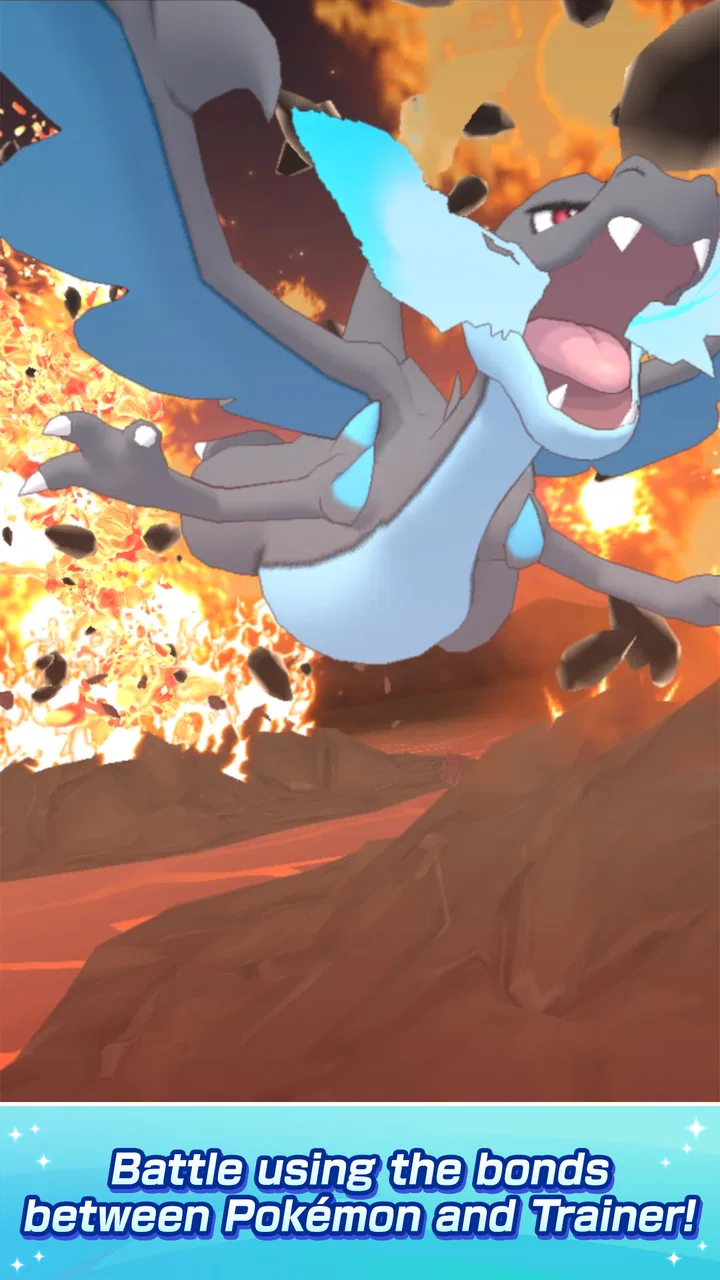
Pokémon Masters EX is a mobile game that allows players to partner with iconic Pokémon Trainers from the series and engage in 3-on-3 real-time battles. Players can form teams, strategize with various abilities, and participate in story-driven events and competitions.
02Is Pokémon Masters EX free to play?
Yes, Pokémon Masters EX is free to download and play. However, it offers in-app purchases for items, currency, and enhancements. These purchases can help speed up progress but are not required to enjoy the game.
03What are Sync Pairs in Pokémon Masters EX?
Sync Pairs are the core of Pokémon Masters EX, consisting of a Pokémon Trainer and their partner Pokémon. Players collect and strengthen these pairs to use in battles. Each Sync Pair has unique abilities and types, requiring strategic planning to maximize effectiveness in battles.
04Can I play Pokémon Masters EX offline?
No, Pokémon Masters EX requires an internet connection to play. The game features online multiplayer modes and frequent updates that necessitate being connected to the internet. Ensure you have a stable connection for the best experience.
05What devices are compatible with Pokémon Masters EX?
Pokémon Masters EX is available on both Android and iOS devices. For Android, a minimum of version 5.0 is required, and for iOS, version 11.0 or later is needed. Ensure your device meets these requirements for optimal performance.
Pros
- Engaging real-time battles
- Stunning graphics and animations
- Diverse roster of trainers
- Frequent updates with new content
- Strategic team-building mechanics
Cons
- Requires constant internet connection
- In-app purchases can be pricey
- Repetitive grinding for resources
- High battery consumption
- Occasional server issues

Pokémon Masters EX
Gallery